
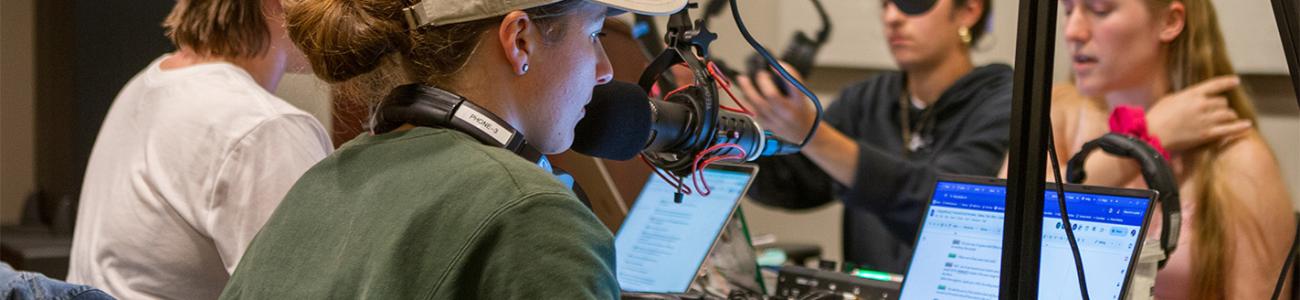
The decisions students make in production, how to sequence, pace, and layer their material, are intellectual decisions, and the act of making opens up new dimensions of what the research means.
In Production mode, every compositional choice carries interpretive weight. How long a moment lasts, what sound accompanies a claim, the weight of a pause: these are rhetorical decisions that shape what an audience understands and feels. As students build drafts and revise, the piece talks back. What seemed clear in the research and story phases meets the resistance of the medium, and that resistance generates new thinking.
Production thrives when it enters the course early and returns often, rather than appearing only at the end as a delivery mechanism. Low-stakes encounters with tools, early on, give students room to discover how design decisions shape meaning before the stakes of a final draft arrive.
Habits of Thinking
What cognitive or scholarly practices students are developing.
- ComposeHow do my technical choices shape what this research becomes?
- RespondWhat does the material reveal when you work with it, and how do you adapt?
- ReflectHow does making change what you understand about the research?
Strategies & Support
These strategies create openings for students to learn through making. Production becomes a space for exploration, reflection, and intellectual growth, where ideas take shape through design choices and iterative work.
- Low-Stakes Production Encounters:
Short recording or editing tasks give students early familiarity with tools and processes. These small engagements let students experiment with sound, pacing, and arrangement while ideas are still forming. - Technical Friction as a Learning Opportunity
Activities that invite students to notice how challenges, surprises, or constraints shape their decisions. Documenting these moments strengthens research habits, encourages flexibility, and surfaces the interpretive nature of production work. - Tool Choice as Rhetorical Choice
Students explore how tools influence expression. Each platform, feature, or method opens certain possibilities and closes others. Observing these dynamics helps students consider how form, audience, and intention interact. - Media Crafting Workshops Hands-on sessions focused on recording, editing, layering, or sequencing. Students explore how compositional decisions support narrative or analytical goals.
- Revision and Feedback Studio Students share drafts, listen to one another's work, and reflect on how revisions shape meaning and audience experience.
Guiding Questions
These prompts support reflection on how production deepens inquiry and shapes understanding:
- What does this tool make possible, and what does it make harder?
- How do sound, image, or sequence influence tone and emphasis in my piece?
- Which people, resources, or ideas supported this stage of my work, and how can I acknowledge them?
- What workflows or habits emerged that I want to carry forward?
- How did the act of making expand or clarify my understanding of the research?
Workshop Examples
Workshops provide structured spaces for students to experiment, troubleshoot, and reflect on how their media choices express ideas.
- Production Planning Session:
Students outline project needs, identify equipment, and establish schedules that support iterative work. - Media Analysis for Makers:
Students examine pacing, structure, sound design, and ethical citation in professional or disciplinary media, using these observations to inform their own production choices. - Media Crafting Workshops:
Hands-on sessions focused on recording, editing, layering, or sequencing. Students explore how compositional decisions support narrative or analytical goals. - Revision & Feedback Studio:
Students share drafts, listen to one another’s work, and reflect on how revisions shape meaning and audience experience.