
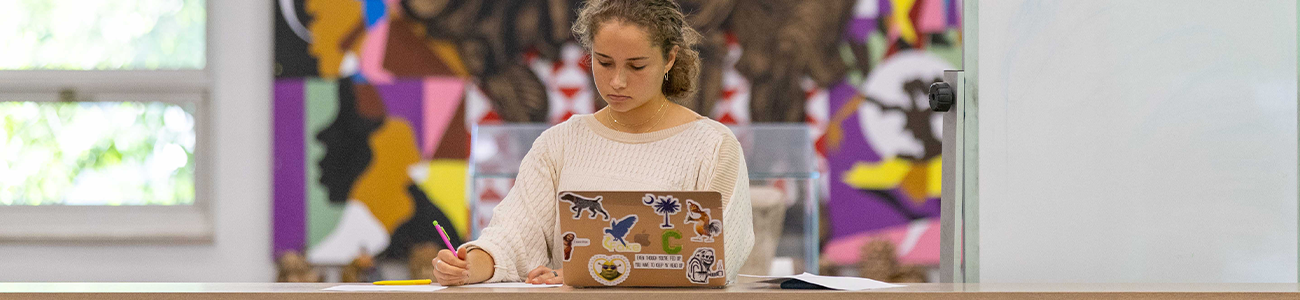
The Reeder Media Center collaborates with faculty to support media-rich course projects such as podcasts, video essays, and digital stories. Our work focuses on helping students connect research, interpretation, and making so that media projects support learning rather than feeling like add-on tasks.
Early conversations help align assignment goals, course rhythms, and available support. This allows students to approach media work with clarity and confidence as their ideas develop.
We tailor our involvement to the needs of your course, from a brief class visit to more sustained collaboration across the semester.
How We Can Support Your Teaching & Learning
Class Visits & Project Introductions
We can visit your class to introduce a media assignment, clarify expectations, and help students understand how research, story, and production relate to one another. These visits are often most effective early in the project, when ideas and questions are still forming.
In-Class Instruction & Workshops
Provide hands-on instruction aligned with course goals. Sessions may focus on:
- shaping research into narrative form
- analyzing media examples
- exploring production practices and workflows
- revising and refining work through making
Workshops can stand alone or connect across multiple class meetings.
Student Consultations
Students can meet individually or in small groups to talk through ideas, plan workflows, and reflect on drafts. Consultations support both the intellectual and practical dimensions of media work as projects evolve.
Ongoing Project Support
For courses with larger or multi-part projects, we can coordinate support across the semester. This may include checkpoints, troubleshooting moments, and opportunities for reflection as students move from inquiry toward communication.
Plan Early, Adjust Lightly
Inquiry-based media projects take shape at the level of course design. A short planning conversation while a syllabus is coming together can help create the conditions students need for meaningful, research-driven media work.
Early collaboration often helps faculty:
- identify where low-stakes practice fits naturally in the semester
- design assignments that serve multiple learning goals
- align research, story development, and production support with the rhythm of the course
Get Started
Reach out for a conversation to think through possibilities, anticipate student needs, and coordinate support. Email troy@wm.edu with a brief description of your course or assignment.