


Special Collections Research Travel Grant
Posted
The Special Collections Research Center at Swem Library is excited to announce that we are now accepting applications for travel grants!

Must Love Dogs: Knitting
Posted
If you've ever had a dog, you are no doubt aware of the amount of dog hair that accumulates on your floor, furniture, and clothes. There have likely been times when you have said something along the lines of "There's enough hair here to knit a sweater." Well, if you ever get the desire to gather up all of that hair for such a purpose, the Chapin-Horowitz Collection of Books on Dogs can hook you up with "Knitting with Dog Hair: A Woof-to-Warp

"Dean"
Posted
For many black students who attended William & Mary during the 1980s and 1990s, "Dean" was a term of endearment—a title that demanded respect because it identified the power player in their corner—and only one individual carried that distinction: Dean Carroll Hardy.
Founders: The People Behind William & Mary
Posted
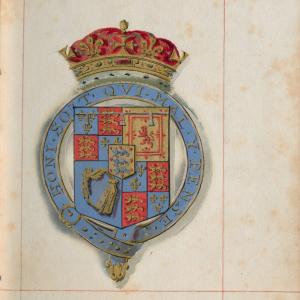
This year's Charter Day marked the 325th anniversary of the founding of William & Mary by William III and Mary II, the first and (to date) only joint-monarchs in British history. An exhibition in the lobby at Swem Library brings the focus to William and Mary – the people, not the university.
The Royal Charter: Manuscript and Print
Posted
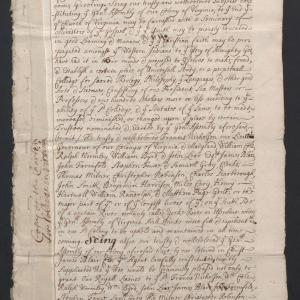
On February 8, 1693, the Royal Charter establishing William & Mary in Virginia was written. William & Mary President James Blair brought both English and Latin versions of the twelve page document with him from the Court of William & Mary at Kensington Palace. The original copy of the charter establishing the College was lost about the time of the American Revolution.
The Dark Side of College Life
Posted
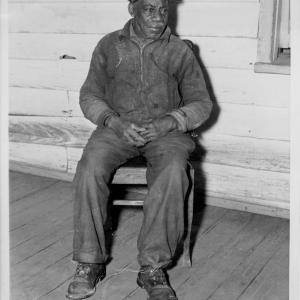
In my everlasting search for materials relating to African Americans in Special Collections, I was pointed to the 1921 edition of the Colonial Echo. Within its worn cover, there is a single page spread entitled "The Dark Side of College Life." These are the only words. The rest of the page is filled with several black and white photographs of exactly what one might expect – black employees of the College.
"His Soul is Marching On": Artifacts from the Raid on Harpers Ferry
Posted
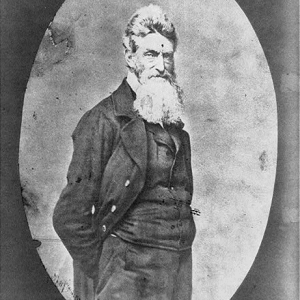
On the night of Sunday October 16, 1859, twenty-three men emerged from the woods surrounding the town of Harpers Ferry, which sits at the confluence of the Potomac and Shenandoah Rivers in present-day West Virginia. Armed with rifles and pikes, their mission was to successfully secure the large cache of weapons kept in the town's armory and expel the U.S. military from the area.
Christmas Behind the Scenes
Posted
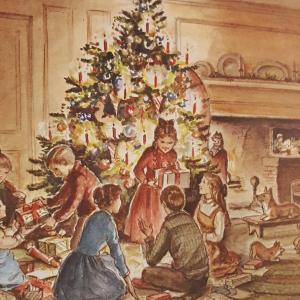
There's nothing like browsing through hundreds of Christmas books right after Halloween to get you in the holiday spirit. Even better is spending hours searching through every box for cookie cutters that were listed under the wrong number. Jokes aside, it was an endless pleasure to pour over colorful illustrations of Santa Claus and pick the perfect pages to display for the campus community.
Tis the Season
Posted
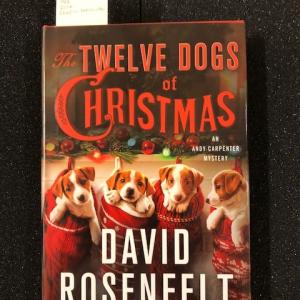
In this month's dog series post, we decided to focus on dog books related to the December holidays. In doing so, it became quickly apparent that while we have a small number of titles related to dogs and Christmas, we do not have titles related to Hanukkah or Kwanzaa. Our awareness of this deficiently will inform future collecting decisions. If there are specific titles you would like to suggest, please hit us up in the comments section.
Basque in the Archives
Posted
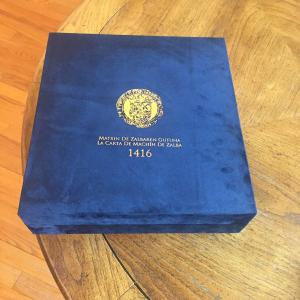
Down in the belly of Special Collections sits a mysterious blue velvet box. Its contents are simultaneously mundane and bizarre, important for the study of language in Spain, and remarkably unremarkable. The box bears the inscription Matxin de Zalbaren Gutuna, La Carta de Machin de Zalba, 1416. What is it? Why do we have it? What makes it both special and ordinary?
Family Donates Civil War Diary of Henry Alexander Scandrett
Posted
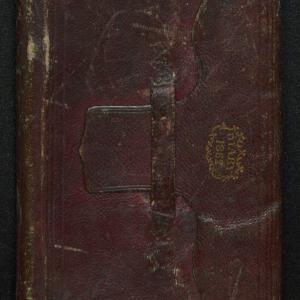
Recently I had the opportunity to attend a conference at Radford University called The Innovative Library Classroom, or TILC. Radford University which is in, yep, you guessed it, Radford, Virginia, is about 270 miles from Williamsburg; therefore, road trip!
Must Love Dogs: 11/11/18
Posted
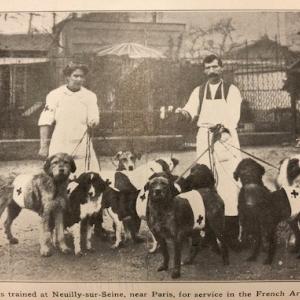
In 1918, at the eleventh hour of the eleventh day of the eleventh month, an armistice was signed between the Allies and Germany, effectively ending World War I. This Saturday marks the anniversary of this event, commemorated as Veteran's Day in the United States, Armistice Day in France, and Remembrance Day in the United Kingdom.
Processing Reveals Trading Cards of Decades Past
Posted
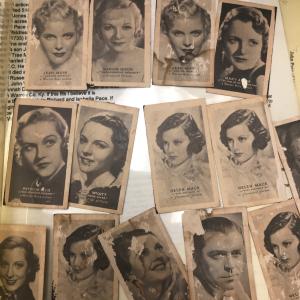
As a child of the 90's, I'm pretty familiar with trading cards. Pokémon and Yugio cards were all the rage throughout my younger years, but little did I know that trading cards have a much richer history than keeping myself occupied throughout elementary school.
Must Love Dogs: Journal of a Neglected Bulldog
Posted
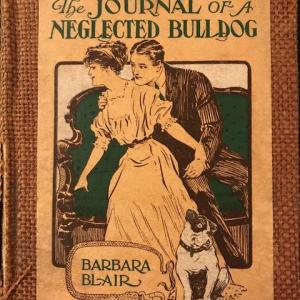
You may recall from our first series blog post that the Special Collections Research Center holds the second largest collection of books on dogs in the United States. Today's blog post highlights one of our many titles, Journal of a Neglected Bulldog by Barbara Blair, published in 1911 by George W. Jacobs & Co. of Philadelphia.
Get ready! National #AskAnArchivistDay is Next Week!
Posted
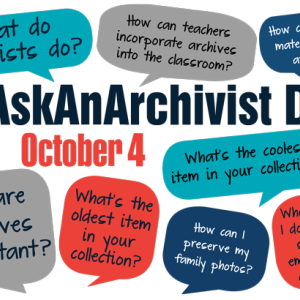
Have you ever wished you could have all of your archives-related questions answered by an archivist? Well you're in luck! October 4, 2017 is national Ask an Archivist Day, sponsored by the Society of American Archivists. Our University Archivist, Kim Sims, will be ready to respond to your questions! Just add @SwemSCRC and #AskAnArchivist to your tweet on October 4.
Mourning Lincoln
Posted
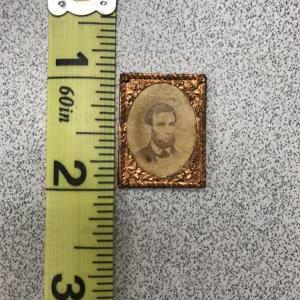
In reviewing boxes labeled as "unprocessed ephemera," a colleague and I came across something really cool. It is a tiny image of Abraham Lincoln framed in copper.
Must Love Dogs
Posted
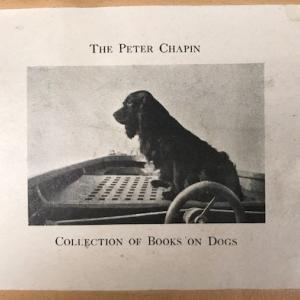
If you've ever visited the Special Collections Research Center, you may have learned that we hold the second largest collection of books about dogs in the United States, second only to the American Kennel Club. I love dogs and thought it would be fun to write a series of blog posts highlighting the dog book collection. This brief introduction to the collection will be the first.
John Marshall Letters Document Writing of George Washington's Biography
Posted
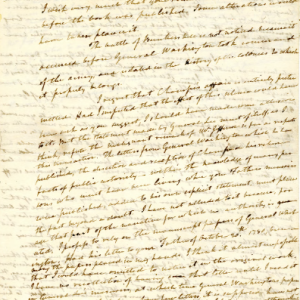
In December 2016, David B. Wolf, a New York attorney and collector interested in John Marshall and his biography of George Washington, donated three letters that join an existing collection of John Marshall Papers.
"The Looted Book"
Posted
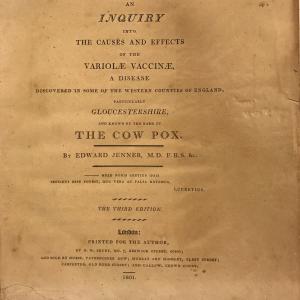
Institutional knowledge is an awesome thing and something that is often taken for granted and/or overlooked. I recently learned a cool story surrounding one of the rare books housed in Special Collections, thanks to former Dean of W&M Libraries, Nancy Marshall.
Mosaic Intern's Work Offers Glimpse of Artistic Text
Posted
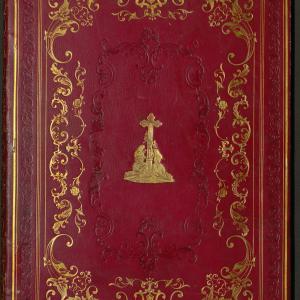
What do Indiana Jones and the Content Services Mosaic Intern have in common? We both spend our days searching for historical treasure: in my case that involves paging through old texts—often plain or even dirty in appearance—researching their autographs and marginalia, and mining valuable snippets of the lives of people important to both our local and national history.